
Concrete floors are popular in industrial and even residential spaces because they’re strong, durable and can handle heavy loads. But not all concrete floors are the same. To make them last longer and work better, we often add treatments to make them harder, more durable and more resistant to wear and tear. One of the most common ways to do this is with a concrete floor hardener.
In this article, we’ll cover:
- What is a concrete floor hardener?
- A comparison of dry shake and liquid hardeners
- How to use dry shake and liquid hardeners
- How to choose between the two
Let’s dive in!
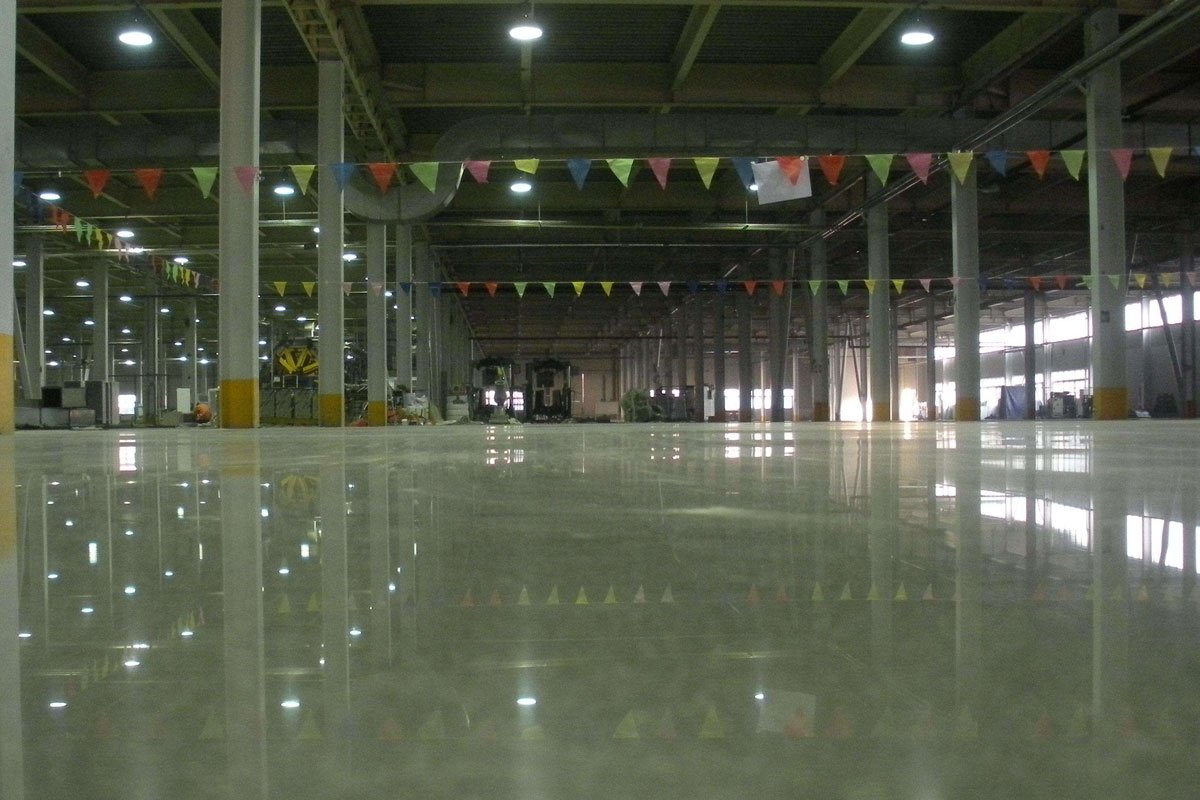
What is a Concrete Floor Hardener?
A concrete floor hardener is a material applied to the surface of a concrete slab to enhance its hardness and durability. It works by penetrating or bonding with the concrete to form a denser, harder surface, which improves its resistance to wear, impact, and chemicals. A hardened surface extends the floor’s lifespan, making it suitable for high-traffic areas or spaces where heavy machinery or equipment is used.
Concrete floor hardeners are commonly used in settings like warehouses, factories, garages, retail spaces, and even residential basements or garages. There are two main types of floor hardeners: dry shake hardener and liquid floor hardener. Both have their advantages, and the choice depends on the project’s specific needs.
Let’s explore each type in detail.
Dry Shake Floor Hardener
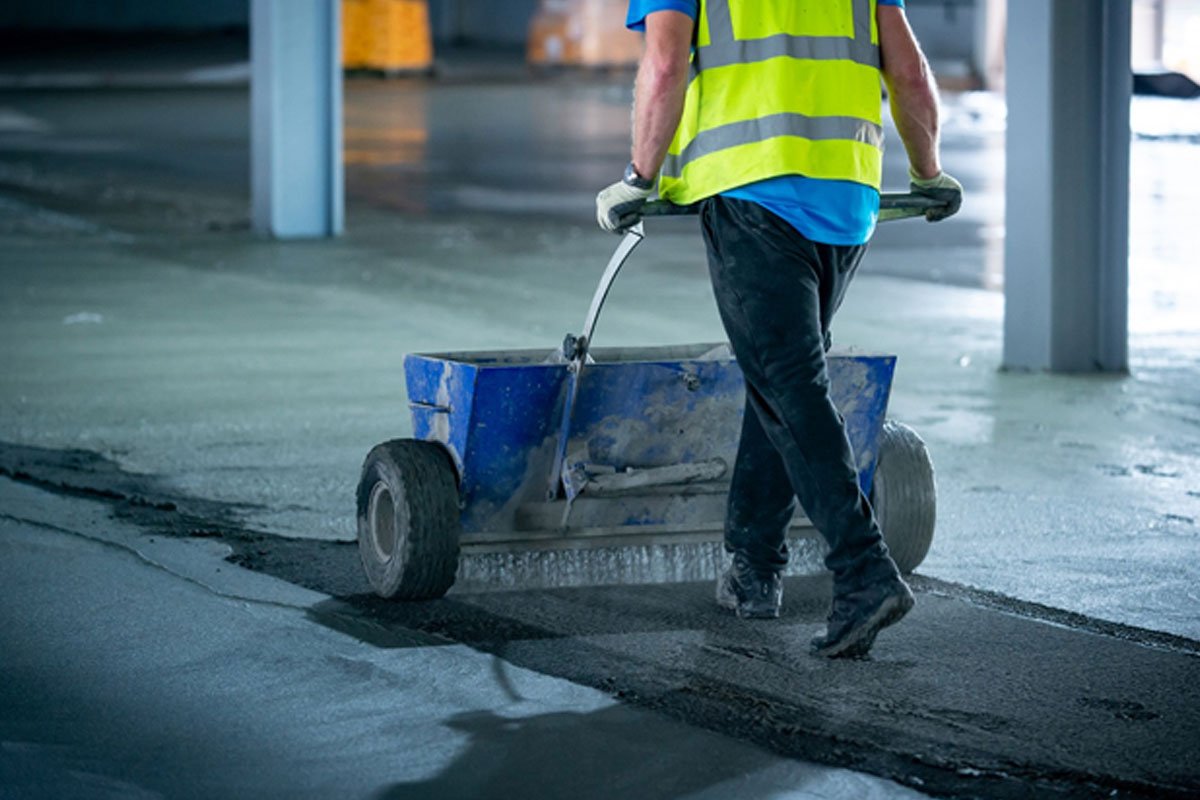
Dry shake hardeners are powder-based materials that are applied during the finishing stage of the concrete installation process. The powder is spread over the freshly poured, wet concrete and then troweled into the surface to integrate it with the top layer.
Common brands of dry shake hardeners include:
- Sika: A Swiss company offering construction chemicals, including dry shake hardeners.
- BASF: A global chemical company with dry shake hardeners under the Master Builders Solutions brand.
- MAPEI: An Italian company that makes flooring and waterproofing products, including dry shake hardeners.
- Euclid Chemical: A US company that makes concrete hardening, repair and protection materials.
- Fosroc: A British construction chemical company with products like Conplast, which includes concrete surface hardeners.
- Cemex: A global leader in building materials, offering various concrete-related products, including hardeners.
- Tremco: A U.S. company with its Euco brand providing high-performance dry shake hardeners.
Composition
Dry shake hardeners consist of hard-wearing aggregates, cement, and other additives (such as colour pigments or microfibers), enhancing the surface’s wear and impact resistance. Some products also contain pigments to offer a colored finish if desired.
Application Process
Here’s a simplified version of the dry shake concrete hardener application process:
- Concrete Pouring: Concrete is poured and screed as usual. Once the surface is leveled but still wet, the dry shake hardener is applied.
- Broadcasting the Hardener: The hardener is evenly spread over the surface manually or with a mechanical spreader. Using the correct amount is crucial to ensure even hardening and wear resistance.
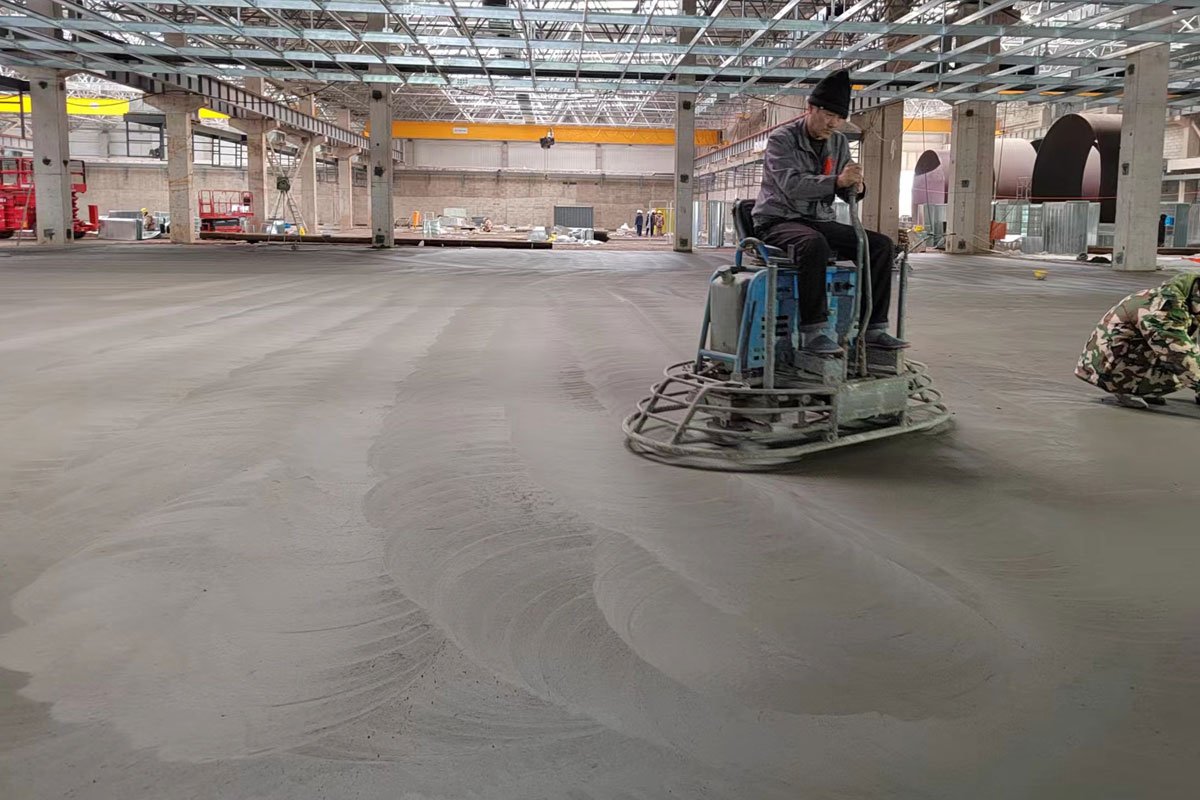
- Troweling: Once the hardener absorbs moisture from the concrete, it is troweled into the surface. This ensures the hardener bonds with the top layer of the concrete.
- Curing: Finally, the surface is cured to allow the hardener and concrete to reach maximum strength.
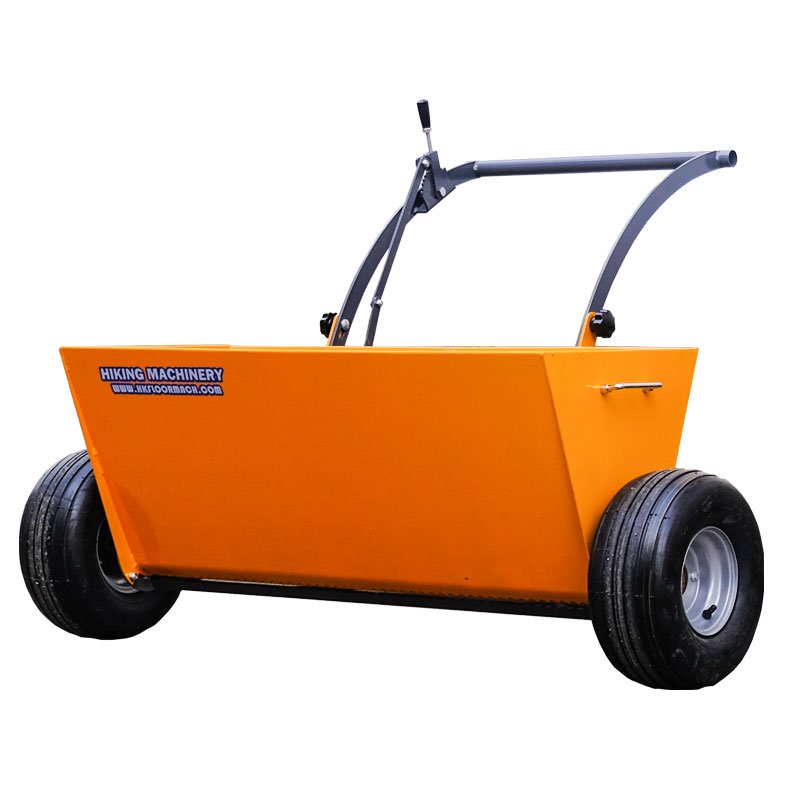
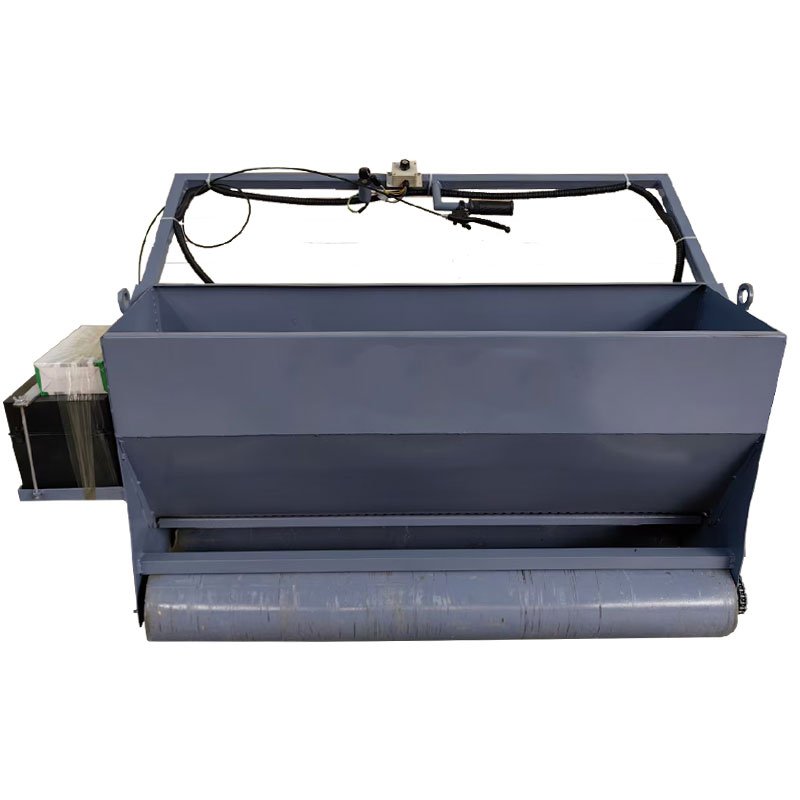
Dry Shake Spreading Machine
For contractors, the spreading of concrete floor hardener has always been a problem. How to spread evenly is related to the efficiency and effectiveness of construction. Hiking machinery has developed three excellent spreader machines for this purpose, allowing you to improve work efficiency and effectiveness.

Dry Shake Hardener Usage Per M²(Square Meter)
For concrete surfaces exposed to varying traffic levels, the recommended dry shake hardener application rates are as follows: for foot traffic or low water-cement ratio concrete, use 3 kg/m². For areas with light forklift traffic or moderate abrasion, apply 3 kg/m². Medium forklift traffic or moderate abrasion requires 5 kg/m², while heavy forklift traffic or high abrasion conditions should be treated with 5 to 7 kg/m² to ensure maximum durability.
Liquid Floor Hardener
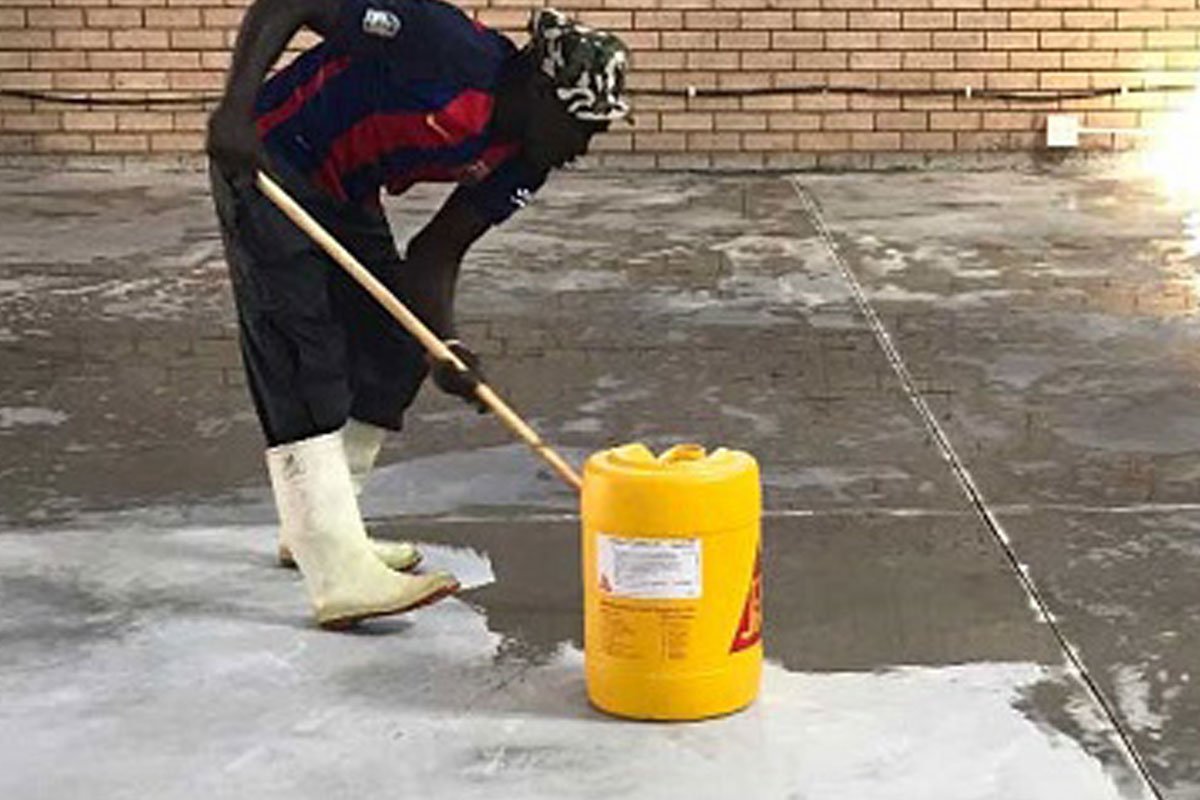
Liquid floor hardeners, also known as chemical hardeners or concrete densifiers, are liquid solutions applied to cured concrete. These products penetrate the concrete and react with calcium hydroxide to create more calcium silicate hydrate (CSH), the compound responsible for the concrete’s strength.
Common brands of liquid floor hardeners include:
- Sika: Sika is well-known for its wide range of construction chemicals, and it also offers high-quality liquid floor hardeners.
- BASF: You’ll find liquid hardeners for concrete flooring under the Master Builders Solutions brand.
- MAPEI: This Italian company has liquid floor hardeners as part of its flooring solutions.
- Euclid Chemical: They’re a US company that makes liquid densifiers and hardeners for concrete floors.
- Fosroc: They’ve got chemical-based solutions, including liquid floor hardeners for industrial and commercial applications.
- Cemex: They’re a global leader in construction materials, and they provide liquid hardeners and other concrete products.
- LATICRETE: They’re known for their innovative construction solutions, and LATICRETE offers liquid floor hardening products.
- Ashford Formula: They’re a well-known brand specifically for their liquid concrete densifiers and hardeners, which are used a lot in industrial flooring.
- WR Meadows: They provide liquid hardening solutions that protect and strengthen concrete floors.
- Curecrete Distribution (RetroPlate): They’re known for liquid floor hardeners that enhance durability and finish of concrete floors.
Composition
Liquid hardeners are generally made from silicate compounds, such as sodium silicate, potassium silicate, or lithium silicate. These compounds react with the concrete to fill microscopic pores, making the surface denser and harder.
Application Process
- Surface Preparation: The concrete surface must be thoroughly cleaned and dried to ensure proper penetration of the liquid hardener.
- Applying the Liquid: The liquid hardener is evenly sprayed or rolled onto the surface and left to soak into the concrete. It reacts with the calcium hydroxide present in the concrete matrix.
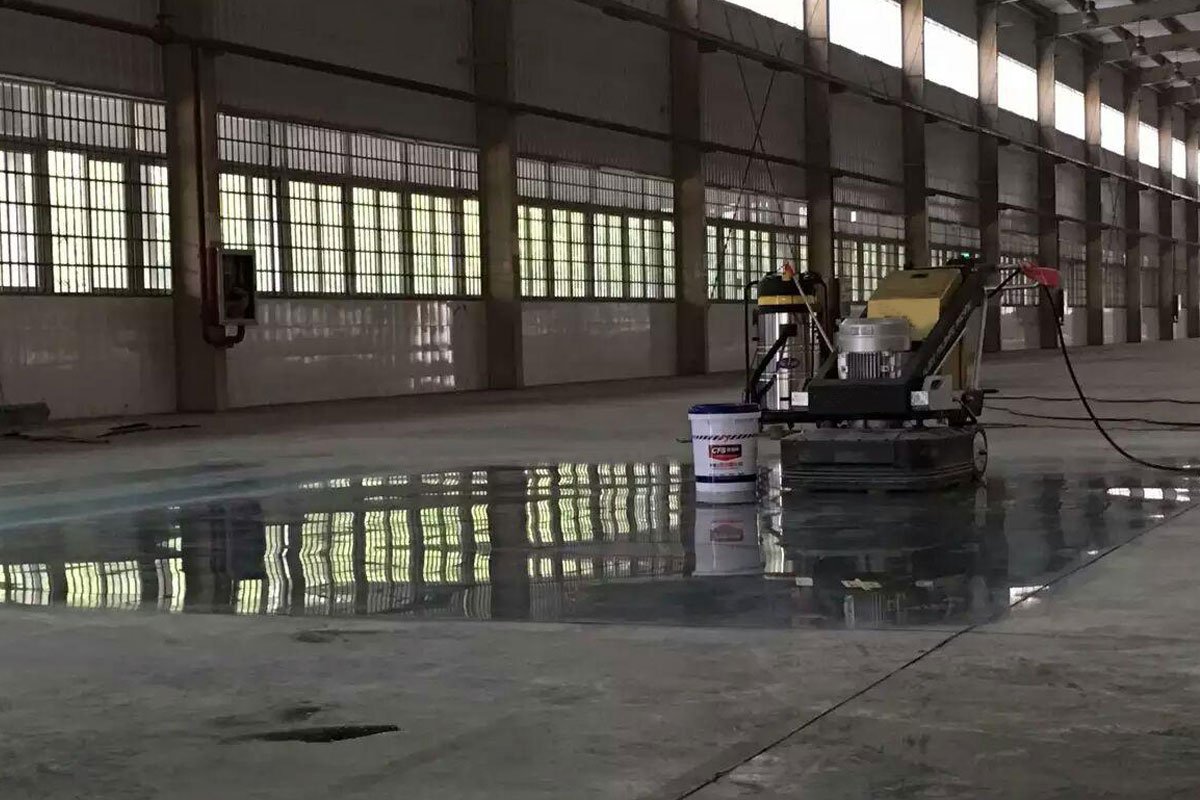
- Buffing/Polishing: Once the liquid hardener has been absorbed and the chemical reaction is complete, the surface is often polished or buffed to achieve the desired level of smoothness or shine.
Liquid Floor Hardener Usage Per M²(Square Meter)
The recommended usage of liquid floor hardeners varies based on the type of product and the condition of the concrete surface. On average, standard applications typically require around 0.2 to 0.4 litres per square meter. However, porous surfaces may absorb more, requiring a higher quantity for effective coverage. It’s important to follow the manufacturer’s guidelines for specific usage to ensure optimal results in terms of hardness and durability.
Dry Shake Hardener vs. Liquid Hardener: Which is Better?
Now that you understand the basic composition and application processes let’s compare the pros and cons of dry shake and liquid hardeners:
| Aspect | Dry Shake Hardener | Liquid Hardener |
|---|---|---|
| Durability | High durability, excellent for heavy traffic areas | Good durability, suitable for medium-duty areas |
| Ease of Application | Labor-intensive, requires skilled workers | Easy to apply, less labor-intensive |
| Surface Strength | Superior surface hardness, ideal for industrial use | Increases surface hardness, but not as strong as dry shake |
| Customization | Can add pigments for color variations | Limited customization in terms of color |
| Cost | Typically higher cost due to labor and material | More cost-effective and quicker to apply |
| Maintenance | Low maintenance once applied, long-lasting | Easy maintenance, often improves with age |
| Timing of Application | Must be applied to wet concrete at a precise time | Can be applied to cured concrete, more flexible timing |
| Penetration Depth | Mostly affects the surface layer | Penetrates deeper into the concrete |
How to Choose
Choosing between dry shake and liquid floor hardeners largely depends on the project’s specific needs.
If maximum surface strength is your top priority, especially in environments with heavy machinery, forklifts, or high foot traffic, a dry shake hardener is likely the best choice due to its superior abrasion resistance. Additionally, dry shake hardeners offer more customisation options if you want to add color to your concrete floor.
On the other hand, if ease of application and overall durability are more important and you’re looking for a cost-effective solution, a liquid hardener could be the better option. Liquid hardeners are ideal for projects where enhancing an existing concrete surface’s durability is the goal, without significant downtime or labor costs.
Conclusion
Both dry shake and liquid concrete floor hardeners are essential in increasing concrete floors’ strength, durability, and lifespan. The choice between them depends on the specific needs of your project. Dry shake hardeners are ideal for industrial settings requiring maximum surface strength and customization. In contrast, liquid hardeners provide a practical, cost-effective solution for improving durability in less demanding environments. Understanding the pros and cons of each will help you make the right decision for your next project.